

Why Ultra-Low Suction Matters in Malaysian Flood Scenarios
Conventional submersible
pumps typically stop pumping when water drops below 30–50 mm, leaving significant residual water on flat surfaces. In Malaysian terrace houses with tiled ground floors and underground car parks with shallow gradients, this remaining water takes hours to evaporate and can seep into wall cavities.
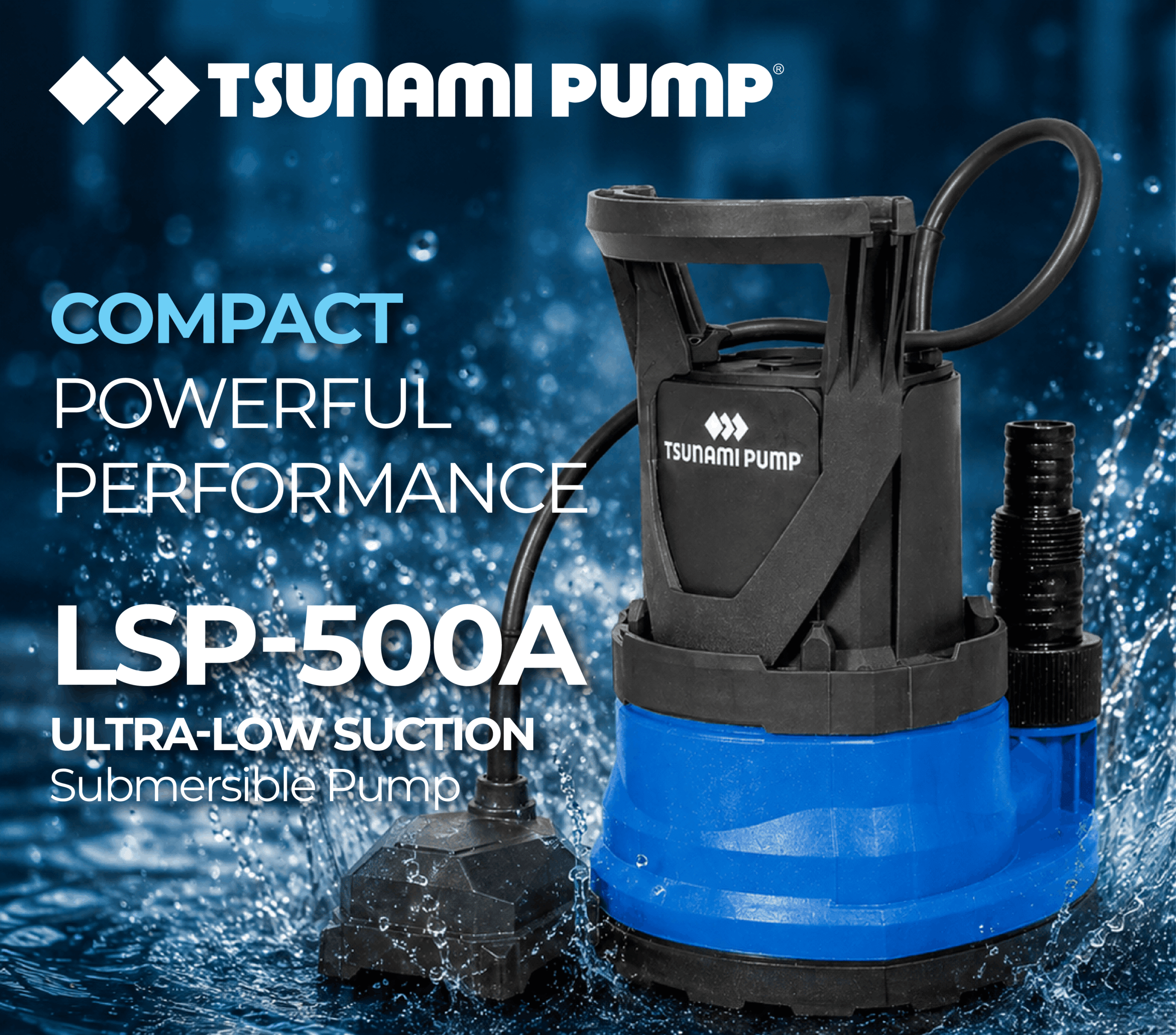
The LSP-500A’s ability to operate down to near dry 1–2 mm means house basements and car parks reach a near-dry state within minutes of the main flood receding. Faster drying reduces humidity spikes and minimises the window for mould colonisation, a critical concern in Malaysia’s tropical climate.
How the LSP-500A Achieves Ultra-Low Suction
The pump employs a flat, wide base plate that allows water to flow laterally into the intake even when the surrounding depth is minimal. Intake ports are positioned at the extreme bottom edge, paired with a centrifugal impeller optimised for low-NPSH conditions.
Side-inlet and top-outlet configurations ensure motor cooling even at low water levels, preventing thermal overload. The LSP-500A routes discharge vertically while drawing water horizontally across the base, so the motor remains submerged and cooled by incoming liquid flow.

Sizing the LSP-500A for Your Application
Correct pump sizing balances flow rate (litres per minute) against total head (vertical lift plus friction losses). For a typical 100 m² basement with an expected 150 mm flood depth and a 3-metre discharge height, calculate total volume (15 m³ or 15,000 litres) and target a pump that delivers at least 250 L/min at 3 m head to complete drainage within an hour.
Hose diameter also matters: a 32 mm hose introduces higher friction loss than a 50 mm hose over the same run, reducing effective flow rate. Always verify pump performance curves at your specific head to avoid undersizing.
Comparison: Ultra-Low Suction vs. Slurry vs. Sewage Pumps
Pump Type | Minimum Water Level | Solids Handling | Best Use Case |
Ultra-Low Suction (LSP-500A) | 1–2 mm | Fine silt, light debris ≤3 mm | Basements, pools, clean floods |
Slurry Pump | 30–50 mm | Heavy sand, mud, solids ≤25 mm | Construction pits, mining sumps |
Sewage Pump | 50–100 mm | Soft solids, fibres ≤50 mm | Septic tanks, wastewater |
Progressing Cavity Pump | Variable | Viscous fluids, abrasive slurries | Industrial sludge, chemicals |
Choose the LSP-500A when near-complete water removal is paramount and solids content is minimal. For heavy mud or construction slurry, a dedicated slurry pump with agitator is more appropriate.

Monsoon Season Readiness: A Checklist for Malaysian Property Owners
Malaysia’s afternoon thunderstorms can dump 80–100mm of rain in under an hour. Have these in place before the season peaks.
- Clear all floor drains and gully traps of leaves and silt
- Identify the lowest point in your basement or car park, that is where the pump goes
- Connect the LSP-500A to an RCD-protected power point before deployment
- Route the discharge hose with a gentle upward slope to reduce back-pressure
- After each use, rinse the intake screen and impeller chamber with clean water before storage
Standard drainage pumps stop at 30–50mm of residual water, leaving the rest to mop manually. The LSP-500A runs down to 1–2mm, eliminating that final stage entirely.
3 Design Insights for Maximum Performance
Intake Limitations Over Bulk Solids
While the LSP-500A easily manages fine silt and light debris up to 3 mm, it is not built to act as a heavy-duty mud pump. Pushing large gravel or thick construction slurry through the intake risks clogging the internal impeller.
The Danger of “Tipping” Standard Pumps
A common mistake is attempting to lay a standard drainage pump on its side to clear shallow water. Without specialized base plate geometry, this disrupts the required liquid flow path, starving the intake and quickly overheating the motor.
Efficiency Trumps Raw Motor Size
A larger motor does not guarantee faster or better drainage. Proper system optimization and matching the pump configuration exactly to your floor space yields up to a 20–50 percent savings in energy usage compared to running an oversized unit inefficiently.
Installation Best Practices for Malaysian Conditions
Position the LSP-500A on the lowest point of the floor, ensuring the base plate sits flat to maximise intake area. Avoid placing the pump on uneven surfaces or gravel, which creates air gaps and reduces suction efficiency.
Use a residual current device (RCD) on the power supply to protect against electric shock in flood conditions. Ensure the power cable has sufficient slack to prevent tension on the pump body, and route the discharge hose with a gentle upward slope to minimise back-pressure and prevent siphoning when the pump stops.
Maintenance and Longevity in Silty Malaysian Water
Malaysia’s urban runoff often carries fine silt, leaves, and organic matter. After each deployment, rinse the LSP-500A intake screen and impeller chamber with clean water to prevent sediment build-up that can unbalance the impeller or clog the cooling path.
Inspect the base plate and intake ports monthly during monsoon season. Regular maintenance extends pump life and preserves efficiency, reducing the total cost of ownership over the unit’s service life.
Final Thoughts and Next Steps
The LSP-500A delivers unmatched performance in ultra-shallow water removal, making it the go-to choice for Malaysian basements, car parks, and pools where every millimetre counts. By pairing correct sizing with proper installation, you achieve faster drainage, lower energy costs, and better flood resilience.
To explore our full range of solutions or to request expert sizing advice for your property, visit tsunamipump.com and speak with a specialist today.