

Self-Priming Pump vs. Home Booster Pump: What’s the Difference?
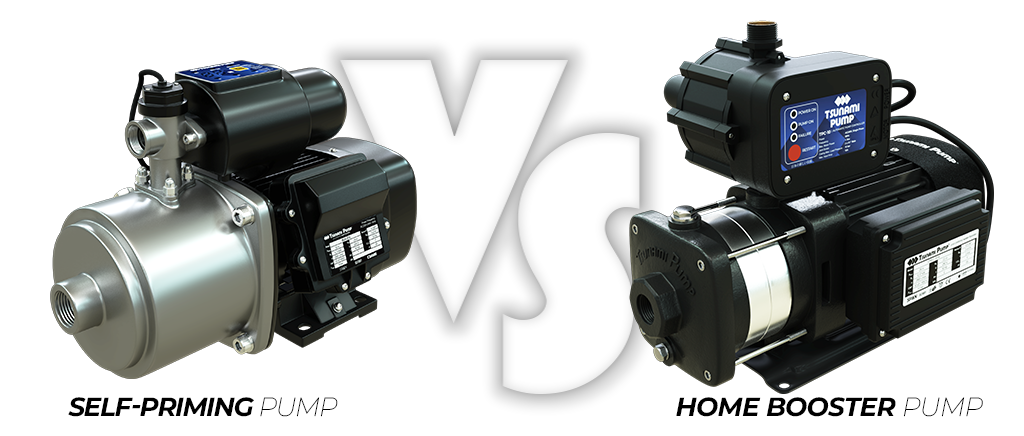
When dealing with water pressure issues at home, two recommendations commonly come up: install a self-priming pump or upgrade to a home booster pump. Install one and problem solved, right? Not necessarily. The problem is that these two systems are designed for different purposes, yet they are frequently treated as interchangeable solutions. Choosing the wrong type does not always cause failure, but more often than not, it leads to inconsistent pressure, unnecessary cycling, or a system that does not fully solve the issue. Understanding what each pump is built to do makes the decision clearer and helps ensure the solution fits your actual water setup. This article breaks down the differences in practical terms, so you can determine which pump suits your home and why. Key Takeaways Self-priming pumps are designed to lift and transfer water from lower sources such as ground tanks, wells or main water supply. Home booster pumps are built to improve pressure within an existing water supply system. Choosing the right pump depends on whether your issue is water access or water pressure. Installation layout, property type, and daily usage patterns all influence pump suitability. Matching the pump to its intended role leads to more stable performance and better long-term reliability. Table of Contents What Problem Each Pump Is Designed to Solve Before looking at mechanics or specifications, it helps to understand why each pump exists. A self-priming pump is designed to access water that is not already pressurised, while a home booster pump is designed to improve pressure where water already exists but weak. Where a self-priming pump fits Where a home booster pump fits Used when water sits below the pump level, such as ground tanks, shallow wells, or collection pits Used when water from main water tank insufficient to provide stable water pressure for multiple outlets Designed to lift water from main water supply into the water storage or distributed into entire building Installed inline with plumbing to strengthen the flow to taps, showers, and appliances Common in rural homes, older landed properties, and utility-focused or water storage setups Common in terrace houses with rooftop tanks, and end-of-line properties Once you define whether your problem is water access or water pressure, most confusion disappears. These pumps are not substitutes for one another. They are tools for different stages of water delivery. Mechanics of How Each Pump Moves Water Through the System Although both pumps move water, the way they do it is different in terms of performance, reliability, and comfort. A self-priming pump relies on suction, while a home booster pump relies on pressure reinforcement. Self-Priming Pump Home Booster Pump Uses suction to draw water from the main water supply. Works with incoming flow from main water tanks Requires a priming chamber filled with water to operate effectively Increases pressure by pushing water through the plumbing network Performance is influenced by suction height, pipe length, and air leaks Responds instantly when a tap opens Pressure output changes as demand changes Maintains steadier pressure across multiple outlets This difference explains why a self-priming pump typically delivers water based on transfer demand, while a booster pump focuses on maintaining steady pressure within a plumbing network. Each design reflects its intended role within the system. Typical Use Cases in Malaysian Homes While the specifications of a water pump matter, its selection also largely depends on the real living conditions of the household it is meant to serve. Housing layout, water source, and storage design all influence which pump makes sense. Malaysia’s housing mix includes terrace houses, kampung homes, high-rise building, bungalows and semi-rural properties. Each creates different water challenges. Where a Self-Priming Pump Makes Practical Sense Self-priming pumps are typically used when water must first be lifted before it can be distributed. Homes using ground tanks or shallow wells In some landed properties and village houses, water is stored at ground level or drawn from a well. A self-priming pump lifts that water to a rooftop tank or elevated storage system. Properties with gravity-fed rooftop tanks Water may be pumped from a lower storage tank or main water supply up to a higher tank. From there, gravity distributes it throughout the house. Irrigation and outdoor washing areas Farms, smallholdings, and rural homes typically use self-priming pumps to move water to hoses, washing bays, or field systems where pressure consistency is less critical than water access. Transfer-focused setups When the goal is moving water from Point A to Point B instead of stabilising tap pressure, self-priming pumps are structurally suited to that role. In these cases, the pump’s primary task is water lifting and transfer. Where a Home Booster Pump Is More Suitable A booster pump comes into play when water is already entering the property, but does not feel strong enough during daily use. Double-storey or three-storey terrace houses Upper-floor bathrooms may experience weaker flow when gravity alone cannot maintain comfortable pressure. Extended Distance from Main Water Tank Water outlets located farther from the main water tank may experience reduced water pressure, particularly during peak usage hours. Households with simultaneous usage When multiple showers, taps, and appliances run at the same time, a booster pump helps maintain stable pressure. In these setups, pressure consistency and daily comfort are the priorities since water access is not the issue. The distinction comes down to purpose. If the challenge is getting water into storage, a self-priming pump fits the system. If the challenge is maintaining comfortable pressure inside the house, a booster pump addresses that need. Matching the pump to the actual role in your plumbing system avoids overcomplicating the setup and keeps performance aligned with expectations. Noise, Wear, and Long-Term Daily Experience Other than pressure, homeowners tend to overlook how much sound and cycling behaviour affect daily satisfaction. Surface-mounted pumps are easier to hear. Pumps that start and stop frequently experience more mechanical stress. Self-Priming Pump Home Booster Pump Installed above ground, so operating noise is more noticeable Designed for frequent daily use Pressure changes lead